
Read Time: 6 minutes
You've probably run the numbers a dozen times. Plugged your income into online calculators, compared monthly rent to potential mortgage payments, and still feel like you're missing something important. Here's the thing – most rent vs. buy calculators focus on the wrong questions.
The real game-changers aren't about monthly payments or down payment amounts. They're about the deeper questions that most people never ask themselves until it's too late. Let's dive into the five questions that could completely shift how you think about your housing decision in 2026.
Question #1: How Long Will You ACTUALLY Stay? (Not How Long You Think You Want To)
This isn't about your five-year plan or where you hope to be someday. This is about reality.
Here's what most people get wrong: They base their decision on ideal scenarios instead of looking at their actual track record. If you've moved three times in the past five years, what makes you think you'll suddenly plant roots for the next decade?
The 2026 Reality Check:
- The average American moves every 7-10 years
- Remote work has made job-related moves less common but lifestyle moves more frequent
- Economic uncertainty means more people are keeping their options open
Questions to ask yourself:
- What caused your last three moves? Are those factors still present in your life?
- Is your current job stable, or are you in a growing/changing industry?
- Are you planning major life changes (marriage, kids, career pivot) in the next 2-3 years?

Pro Tip: If you're not 80% confident you'll stay put for at least 5 years, renting probably makes more financial sense, even if the monthly numbers favor buying.
Question #2: Can You Handle the REAL Cost of Homeownership? (Spoiler: It's Not Just the Mortgage)
Let's get real about what homeownership actually costs in 2026. Your mortgage payment is just the beginning.
The Hidden Costs Everyone Underestimates:
- Maintenance and repairs: Budget 2-4% of your home's value annually
- Property taxes: Often increase faster than inflation
- Insurance: Homeowners insurance has jumped 20%+ in many areas over the past two years
- Utilities: You're now responsible for all of them
- HOA fees: Average $200-$400 monthly in many areas
- Emergency fund: You need 3-6 months of total housing costs saved
The Renter's Hidden Advantage:
When your AC breaks in July, you call the landlord. When you own, you call the repair company – and hand over $3,000.
Do this math exercise:
- Take your potential monthly mortgage payment
- Add 25-30% for maintenance, taxes, insurance, and utilities
- Compare that to your current rent (including any utilities you pay)
- Still feeling good about buying?
Question #3: What Will Your Rent Look Like in 5 Years? (This Might Shock You)
Here's where the long-term math gets interesting. While homeowners lock in their principal and interest payments, renters face annual increases.
The 2026 Rent Increase Reality:
- National average rent increases: 3-5% annually
- In high-growth areas: 5-8% annually
- Your $2,000 rent today becomes $2,653 in 5 years (at 5% annual increases)
- Over 10 years? That same rent hits $3,257
But here's the flip side: As a renter, you also have flexibility. If your area gets too expensive, you can move. If the local job market tanks, you're not stuck with a mortgage in a declining market.
Questions to consider:
- How rapidly are rents rising in your specific area?
- Do you have the flexibility to relocate if costs get out of control?
- Are you in a rent-stabilized area, or subject to market-rate increases?
Question #4: Are You Prepared for Market Volatility? (2026 Isn't 2020)
The housing market of 2026 looks nothing like the wild ride of 2020-2022. Here's what you need to know:
Current Market Conditions:
- Interest rates have stabilized but remain higher than the pandemic lows
- Home appreciation has slowed from the crazy 15-20% annual gains
- Inventory is more balanced in most markets
- Cash buyers still represent about 25-30% of purchases
What This Means for You:
- Your home might appreciate 3-5% annually (historically normal)
- You're not racing against dozens of other buyers on every house
- But you're also not building equity as rapidly as buyers did 2-3 years ago
The Volatility Question: Can you handle it if your home value drops 10-15% in year two? Because it could happen. Real estate moves in cycles, and what goes up can come down.
Risk Tolerance Check:
- Do you have stable income that could weather economic uncertainty?
- Can you sleep at night knowing your home value fluctuates?
- Are you buying a home or making an investment? (These are different mindsets)
Question #5: What Does Your Lifestyle Actually Need? (Not Want – Need)
This is where people make expensive mistakes. They focus on finances and forget about lifestyle fit.
The Homeowner Lifestyle:
- Weekends often involve home projects and yard work
- You can't just pack up and move for a better job opportunity
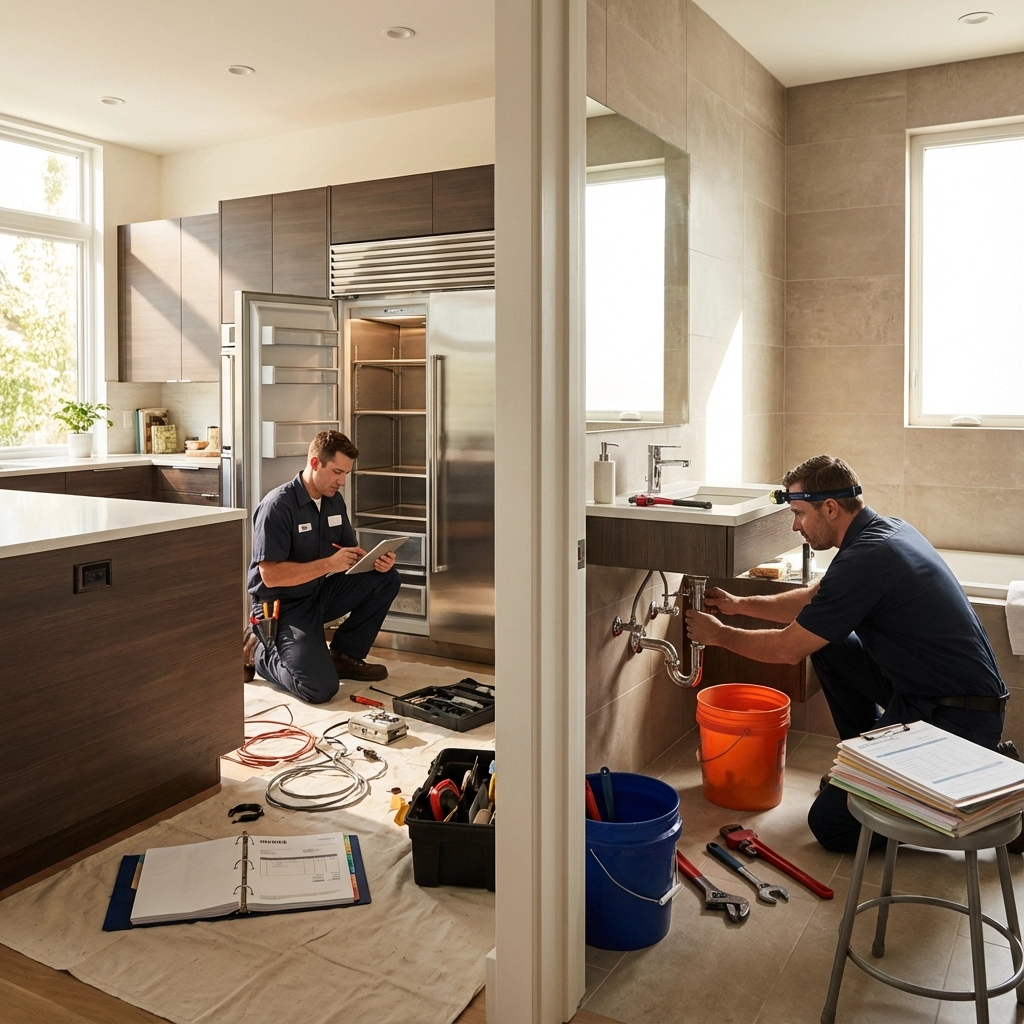
- You're responsible for everything that breaks, leaks, or stops working
- But you get complete control over your space and the satisfaction of ownership
The Renter Lifestyle:
- Maximum flexibility for career and life changes
- Minimal responsibility for maintenance and repairs
- Ability to "upgrade" your living situation by moving
- But you're at the mercy of landlords and lease terms

Lifestyle Questions That Matter:
- Do you actually enjoy home improvement projects, or do you just like the idea of them?
- How important is it for you to customize your living space?
- Are you in a stable life phase, or still figuring things out?
- Do you travel frequently for work or pleasure?
Pro Tip: If you're someone who gets restless easily or values experiences over possessions, renting might align better with your personality, even if buying makes financial sense on paper.
The Real Decision Framework for 2026
Here's how to actually use these questions:
Step 1: Answer each question honestly, not optimistically
Step 2: If 3+ questions point toward renting, seriously consider waiting
Step 3: If 3+ questions point toward buying, start your home search
Step 4: If it's a tie, your local market conditions should be the tiebreaker
When to Definitely Rent:
- You're not sure about staying in your current city for 5+ years
- You haven't built up a solid emergency fund beyond your down payment
- Your income is variable or you're in career transition
- You value flexibility over stability right now
When to Definitely Buy:
- You're committed to staying put for the long haul
- You have stable income and solid emergency savings
- You're ready for the responsibilities of homeownership
- Local rent increases are outpacing mortgage costs significantly
Your Next Steps
The rent vs. buy decision isn't just about running numbers through a calculator. It's about understanding your life, your priorities, and your financial situation holistically.
If you're still on the fence after working through these questions, that's completely normal. This is one of the biggest financial decisions you'll ever make, and it deserves careful consideration.
Ready to dive deeper? Our team at The Dennedy Home Group helps people navigate exactly these decisions every day. We can run real numbers for your specific situation, show you what's actually available in your price range, and help you understand your local market dynamics.
Check out our First-Time Homebuyer's Guide for more detailed information, or get in touch when you're ready to explore your options.
Remember: there's no universally "right" answer to rent vs. buy. There's only what's right for your specific situation, goals, and lifestyle. Take your time, ask the hard questions, and make the decision that gives you peace of mind – not just the best spreadsheet numbers.