
Read Time: 7 minutes
Let's be honest – buying a home in 2025 feels like trying to solve a Rubik's cube blindfolded. With mortgage rates hovering around 6-7% and home prices still sky-high in many areas, you're probably exploring every option to make homeownership work for your budget.
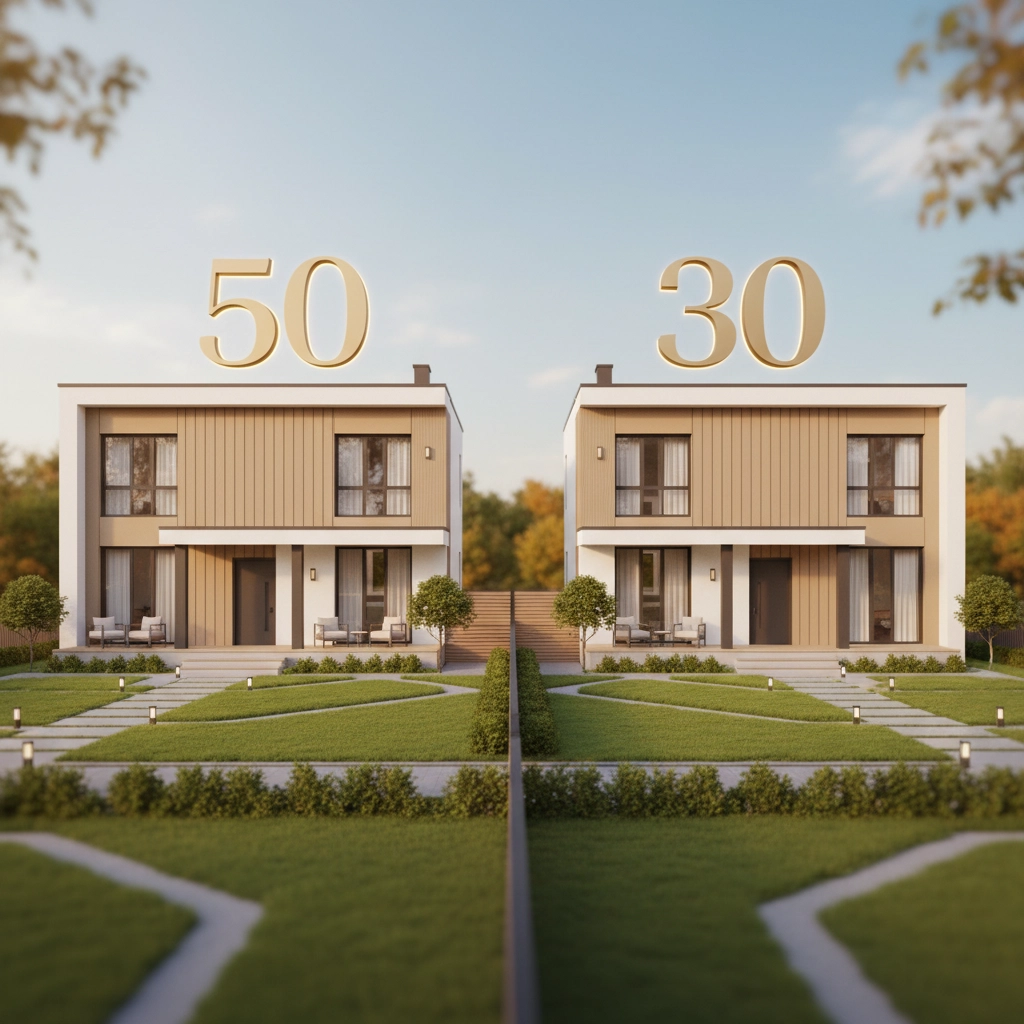
One option that's gaining attention is the 50-year mortgage. Yeah, you read that right – a mortgage that takes half a century to pay off. But before you either dismiss it completely or jump on it as your saving grace, let's break down how it actually stacks up against the traditional 30-year loan.
What Exactly Are We Comparing Here?
Traditional 30-Year Mortgage
This is the bread and butter of American homeownership. You borrow money, pay it back over 360 monthly payments, and boom – you own your home free and clear in three decades. It's been the gold standard since your grandparents were house hunting.
50-Year Mortgage
Think of this as the marathon of mortgages. Instead of 360 payments, you're looking at 600 monthly payments spread across five decades. It's not exactly new – these loans popped up during the 2008 housing crisis – but they're making a comeback as buyers search for affordability solutions.
The Numbers Game: Let's Talk Real Money
Here's where things get interesting (and a little scary, depending on how you look at it). Let's use a $400,000 home as our example – pretty typical for many markets in 2025.
| Loan Details | 50-Year Mortgage | 30-Year Mortgage |
|---|---|---|
| Monthly Payment | ~$2,400 (at 7%) | ~$2,661 (at 6.5%) |
| Total Interest Paid | ~$952,000 | ~$558,000 |
| Total Amount Paid | ~$1,352,000 | ~$958,000 |
| Interest Rate | Typically 0.25%-0.75% higher | More competitive rates |
Wait, hold up. Did you catch that? With the 50-year loan, you'd pay almost $400,000 more in interest over the life of the loan. That's like buying a second house just in interest payments.
But here's the flip side – you save about $260 per month with the 50-year option. Over a year, that's over $3,100 that stays in your pocket each month.
50-Year Mortgage: The Good, The Bad, and The Reality Check
The Good Stuff
Lower Monthly Payments Are Real
That monthly savings isn't pocket change. For many buyers, especially first-timers or those with moderate incomes, that $260 difference could mean the difference between qualifying for a loan or getting rejected. When lenders look at your debt-to-income ratio, a lower monthly payment makes you look more attractive on paper.
More Cash Flow Flexibility
Let's say you get that house with the 50-year mortgage. Now you've got an extra $260 each month to:
- Build an emergency fund faster
- Max out your 401(k) contributions
- Invest in index funds
- Handle unexpected expenses without stress
Easier to Qualify
Banks love seeing lower monthly housing payments relative to your income. If you're borderline on qualifying for that dream home, a 50-year mortgage might be the key that unlocks the door.
The Not-So-Good Stuff
You'll Pay a Fortune in Interest
We're talking about nearly a million dollars in interest alone on a $400,000 loan. Even if you invest that monthly savings religiously and earn great returns, you'd need some serious market magic to come out ahead of the traditional mortgage.
Equity Builds Slower Than Molasses
With a 50-year loan, you're barely chipping away at the principal balance for the first 15-20 years. Most of your monthly payment goes straight to interest. If you need to sell or refinance in the early years, you might find yourself underwater or with minimal equity to work with.
Higher Interest Rates
Lenders aren't stupid – they know 50-year loans are riskier for them. Expect to pay anywhere from 0.25% to 0.75% more in interest rate compared to a 30-year loan.
Traditional 30-Year Mortgage: The Tried and True
Why 30-Year Loans Still Rule
You'll Save Hundreds of Thousands
That $400,000 less in total interest? That's real money that could fund your retirement, pay for your kids' college, or buy a sweet vacation home.
Equity Actually Builds
By year 15 of a 30-year mortgage, you'll have paid down a significant chunk of your principal. That equity becomes a powerful financial tool – you can tap it for home improvements, emergencies, or investment opportunities.
Better Interest Rates
Lenders compete hard for 30-year mortgage business, which means better rates for you.
Mortgage-Free Before Retirement
There's something beautiful about entering your golden years without a mortgage payment. Your housing costs drop to just property taxes, insurance, and maintenance.
The Downsides
Higher Monthly Payments
That extra $260 per month might stretch your budget thin, especially in the early years of homeownership when you're also dealing with moving costs, furniture purchases, and all those surprise expenses that come with owning a home.
Tougher to Qualify
Some buyers simply can't make the monthly numbers work with a 30-year loan, especially in expensive markets.
So, Which Mortgage Fits Your Life?
Go With the 50-Year Mortgage If:
- You're disciplined with money and will actually invest that monthly savings instead of lifestyle inflating
- Income is your biggest hurdle to homeownership, and the lower payment makes the difference
- You plan to refinance within 5-10 years as your income grows or rates improve
- Cash flow flexibility is more important to you than long-term wealth building right now
Stick With the 30-Year Loan If:
- You can comfortably afford the higher payment without stressing your budget
- Building equity and minimizing interest costs are priorities
- You want to be mortgage-free before or early in retirement
- You plan to stay in the home for 15+ years

The 2025 Reality Check
Here's what I'm seeing in today's market: More buyers are considering 50-year mortgages not because they want to, but because home prices and interest rates have made traditional financing feel impossible.
But here's my honest take – if you need a 50-year mortgage just to afford the monthly payment, you might be stretching too thin. Consider these alternatives first:
- Look at less expensive neighborhoods or smaller homes
- Save for a bigger down payment to reduce your loan amount
- Improve your credit score to qualify for better rates
- Consider a 15-year mortgage if you can swing the payments (you'll pay way less interest)
- Wait and save more if the market allows
The Bottom Line
A 50-year mortgage isn't inherently evil, but it's expensive – really expensive. It makes sense for a small subset of buyers who genuinely can't qualify any other way and have a concrete plan for those monthly savings.
For most people, though, you'll build more wealth with a traditional 30-year mortgage. Yes, the monthly payments are higher, but you'll own your home decades sooner and pay hundreds of thousands less in interest.
Pro Tip: Whatever you choose, run the numbers with a qualified loan officer. Every situation is different, and what works for your neighbor might not work for you.
If you're weighing these options and need someone to walk through the real numbers for your specific situation, let's chat. I've helped plenty of buyers navigate these decisions, and I promise to give you the straight truth about what makes sense for your budget and goals.
Remember – the best mortgage is the one that helps you achieve homeownership without keeping you awake at night worrying about the payments.